The types of bearings commonly used in robotic arms include:
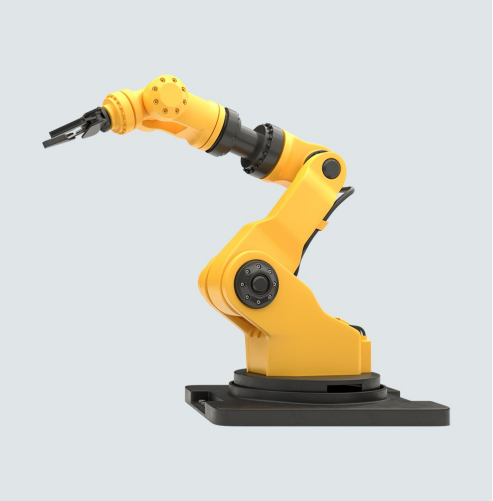
Factors such as load, speed, accuracy, rigidity and environment should be considered when selecting bearings.
In the application of mechanical arm, the technical indicators of bearings are crucial, mainly focusing on the following points:
- Radial load: The force perpendicular to the axis that the bearing can bear.
- Axial load: the force that the bearing can bear along the axis.
- Dynamic load: the load capacity of the bearing in motion.
- Static load: the load capacity of the bearing at rest.
- Rotation accuracy: the deviation of the bearing when rotating affects the positioning accuracy of the mechanical arm.
- Dimensional accuracy: the dimensional tolerance of the bearing, which affects the installation and fit.
- Radial rigidity: the ability of the bearing to resist radial deformation.
- Axial rigidity: the ability of the bearing to resist axial deformation.
4: Speed
- Limit speed: the highest speed of the bearing under certain conditions.
- Allowable speed: the safe speed of the bearing in practical application.
- Friction coefficient: the friction characteristics of the bearing, affecting efficiency and temperature rise.
- Temperature rise: The temperature of the bearing increases during operation, affecting the life and performance.
Fatigue life: the time or number of times the bearing runs before fatigue failure.
- Wear life: the running time before the bearing fails due to wear.
7. Lubricate
- Lubrication method: such as grease lubrication, oil lubrication, etc.
- Lubricant type: such as mineral oil, synthetic oil, etc.
- Sealing performance: prevent contaminants from entering and lubricant leakage.
- Protection level: such as IP level, dust and water resistance.
- Installation mode: such as pressing type, hot loading type, etc.
- Maintenance requirements: such as lubrication cycle, inspection frequency, etc.
- Temperature range: the temperature range within which the bearing can work normally.
- Corrosion resistance: Durability in corrosive environments.
- Vibration level: the vibration of the bearing during operation.
- Noise level: the noise level of the bearing during operation.
Bearing materials: such as steel, ceramics, etc., affect performance and life.
- Cage materials: such as steel, plastic, etc., affect high-speed performance.
Comprehensive consideration of these indicators can ensure the reliability and performance of bearings in the mechanical arm.

